For many people, survival mode doesn’t feel dramatic while they are inside of it.
This post may contain affiliate links.
It feels normal.
It looks like getting up every day and doing what needs to be done.
Showing up.
Stay connected
New podcast episodes, articles, and reflections on healing, growth, and becoming.
Being responsible.
Carrying more than you should.
Staying strong because there doesn’t seem to be another option.
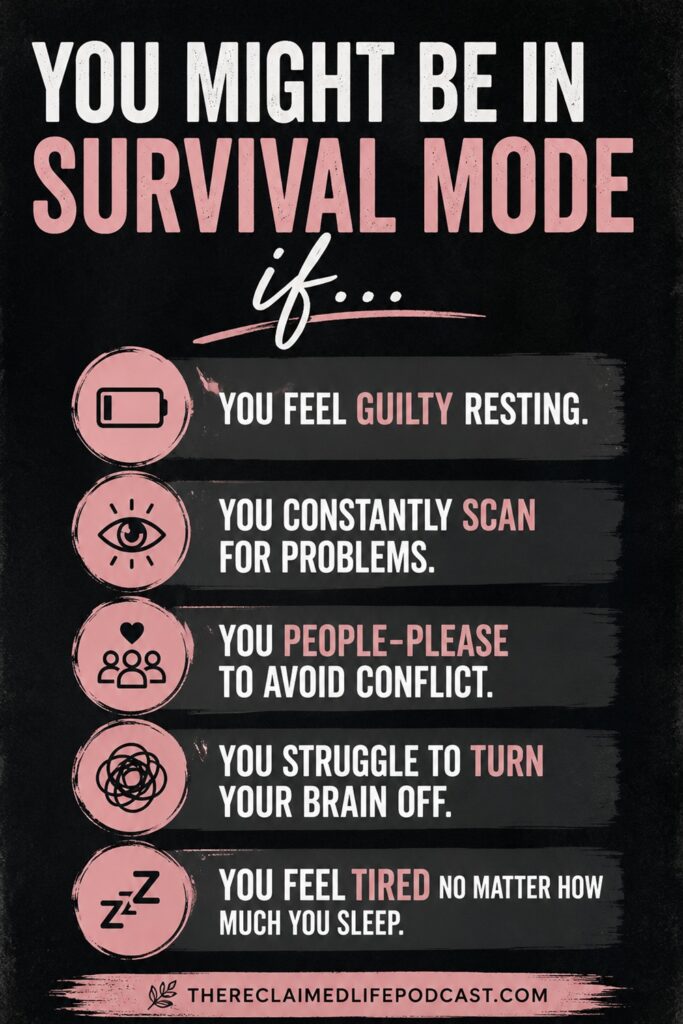
It looks like overthinking every conversation, anticipating every problem, managing everyone else’s emotions, and constantly scanning for what might go wrong next.
It looks like people-pleasing because conflict feels expensive.
It looks like staying hyperaware because your nervous system learned that paying attention was safer than relaxing.
It looks like holding everything together while quietly wondering why you’re so tired.
The tricky thing about survival mode is that it often becomes so familiar that you stop noticing it.
You assume everyone feels this way.
You assume everyone is carrying this much.
You assume your exhaustion is a character flaw instead of a clue.
But constantly being “on” is not the same thing as being at peace.
Constantly managing, anticipating, fixing, and performing strength requires energy.
A lot of energy.
Sometimes survival mode doesn’t announce itself with chaos.
Sometimes it quietly disguises itself as competence.
And because you’re functioning, nobody realizes how much you’re carrying.
Sometimes not even you.